They’ve asked me to focus on radio imaging and production in the UK – in an hour. And that will encompass all manner of stations and formats. So, I’ve narrowed it down a little – to focus on a few key stations; Capital FM, Absolute Radio, Jack FM and Radio 1. And I’ve created a virtual panel for the event – which will feature some substantial contributions (in the form of videos) with Arden Hanley at Capital, Vince Lynch at Absolute and Joe Thomas from Jack FM. I’m also throwing in some examples of how I’ve worked with imaging over the past 10 years or so as well.
But it would be great to get a quick snapshot of imaging across the rest of the Uk. So, if you’re an imaging producer at a station large or small in the Uk, and fancy featuring in a quick audio snapshot, then please email me your best promo or piece of imaging from the last few months – and I’ll try and include it in a short montage as part of the presentation. I’ll need it by this weekend. Email me – jamesstodd01@gmail.com
And if you’re reading this in Germany and are coming to the event – I look forward to meeting you.
So the long talked about rebranding of Red Dragon FM has finally happened. Pretty soon, Red Dragon FM will become another footnote in history.
As ever, people such as Matt Deegan, James Cridland and Nik Goodman have analysed what it means for the business in ways far better than I can attempt.
My views on the “Globalisation” of commercial radio have been stated before. It makes sense for their business model. It makes sense for many large advertisers. And put simply, it makes it far easier for the company to only have to manage brands rather than stations. But that doesn’t make it any easier for another passionate team who now have an uncertain future in a rapidly shrinking radio jobs market.
Listening to Red Dragon FM a couple of weeks back, the station sounded great. It was however using the same jingles as Capital. And some of the same voices. And like Capital, it’s a great listen (if CHR format radio is your thing). But, it sounded truly local – with loads of local voices. So will this really change things?
There were rumours of Red Dragon becoming Capital FM back when I worked at Red Dragon back in 1998-2002 – (and to be honest, the name change works fine – it is a Capital city). But back then, we were allowed a big nod to sounding local. Our aspirations were as big as Capital in London. And the audience figures steadily rose.
However, the one key element we added (and which the guys at Leicester Square couldn’t give us) was a large dose of National Pride. It was (and from what I understand still is) pretty hard to persuade the guys in London what being Welsh actually meant. At the time, we played a far more localised playlist – with a bigger dose of the Manics, Stereophonics and Catatonia than was heard in London and Birmingham.
And one time it really worked well was during big Rugby matches.
If you’ve never stood on St Mary’s street in Cardiff during a Welsh Rugby International, then chances are, you have never felt a sense of pride like it. I guess it happens outside Murrayfield too. But there’s an intense passion. The sense of pride and emotion and excitement that lived on air during the 1999 Rugby World cup was immense. We owned the city – and the listeners loved it.
And we went big on it in all elements of production
From the news
And with listeners
When Capital launches in January, if they don’t keep some element of Welshness, I think they could be missing a trick.Does it matter? Will the listeners really care? Time will tell. But I guess Real Radio and Nation Radio will ramp up their Welshness a little bit more.
Still, there’s at least one part of Red Dragon FM’s name that will live on.
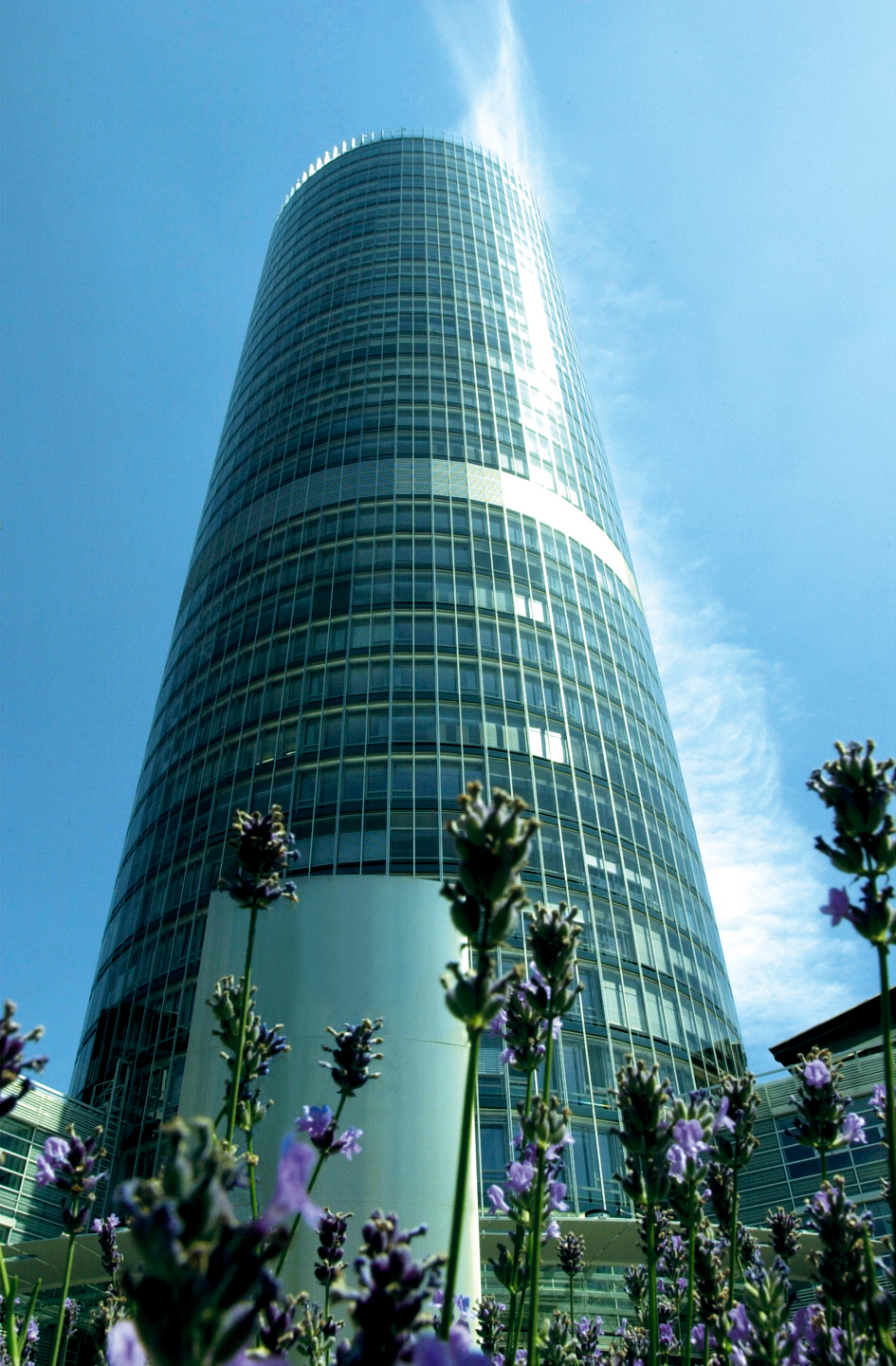
The centre they broadcast from was rebranded from Atlantic Wharf to The Red Dragon Centre a few years back.
Global might find it harder to change that to the Capital Centre – since one of those already exists.
It opened on October 20th 1984. On Monday July 26th 2010, Mercury Fm in Crawley ceased to be – another of Global Radio’s stations that have been rebranded Heart. This is progress – and makes absolute sense in their business strategy. But is another marker in radio history. UPDATE: and not everyone is happy about it.
This was station founded in the great early days of Independent Local Radio. The days when there was enough money to have the Royal Philharmonic Orchestra record your station theme.
My first paid radio work came at Radio Mercury in Crawley. This was after years of hospital and student radio. At Mercury, I gained experience in all aspects of the radio craft, from producing programmes, reading news bulletins, working the radio car and all aspects of studio craft.
It was a big station back in those days. Located in Broadfield House in Crawley, it was a large scale traditional ILR station. There was a newsroom (in the old stables) with a team of 5 or 6 people. A commercial production team of 4. And in programming, the PD, his secretary, a head of music, 3 producers, a couple of programming assistants and maybe even a music librarian. Plus 3 receptionists!
And it was the PD, Martin Campbell, who gave me my break into radio – letting me loose on producing the station’s Guildford breakfast show. And once in, I never left.
When I arrived at Mercury FM, all I wanted to do was be on air. I’d spent years at hospital radio and 3 years at uni mainly hanging out at the student station. In fact in 1982, I’d even won “Best Male DJ” at the original Student Radio awards. And it was Mercury that let me on air. Firstly on many shifts (mostly overnight) on the “Weekend if a Thousand Hits”. Then a time covering lates and sometimes even evenings. And then in 1985, I spent a year as drivetime presenter on Mercury Extra AM. (You don’t remember that station – well, frankly, neither did the listeners). After that experience, I decided I’d rather spend time in the production studio, which I’d been doing all the time I’d been there, and so switched over to be the Commercial Producer – and also gained my first “Station Sound” role too – though that particular term hadn’t been thought of at that point.
In fact this is how we sounded back then. (BTW – this audio breaks my rule from my Capital FM days; Simpsons Grabs = demo tape bin. But this was way back in 1996 – so is just about OK..) (Oh, and the whole Power of Radioactivity thing came from the fact that Crawley was designated the UK’s first Nuclear Free town. Or something. Go figure..)
Back in the 1990s, stations like Mercury gave you the opportunity to grow, to develop, to learn. And I learned from many people still making their mark in radio in many fields. People like Will Jackson (GTN / Traffic Radio), Will Kinder (Radio 1), Matt Smith (SKY News), Dan Wright (Koink).
Now with consolidated stations, networked hours and fewer ways into the industry, is it maybe time for the industry to create a unified qualification and training programme to ensure that future entrants are fully equipped with skills and relevant experience needed. There are precious few stations now where anyone new to the industry would be able to gain the skills that I learned there. Maybe such a scheme could use BBC Local radio stations as a feeder – with those making the best progress able to compete for placements and experience at larger networks or national brands. Whilst college courses fulfill some of those needs, the best place to learn these skills is on the job.
Ironically, it probably is Global Radio who are currently doing the most in this direction, with the establishment of the Global Radio Academy. Hopefully this will give as much insight to the industry’s new young hopefuls as Mercury FM did many years ago.
So RIP Radio mercury – I owe you much more than you ever could know.
Aside from anything else, it’s a great listen. I don’t think I’ll be able to find an opportunity to get a cow noise in my curent campaign for the BBC Proms. But did manage to get loads of cows in a promotion on Red Dragon FM back in 2000. The station’s sonic logo even featured a cow for the duration! This was a time when we were allowed to do crazy promotions, free form scripts and have fun.
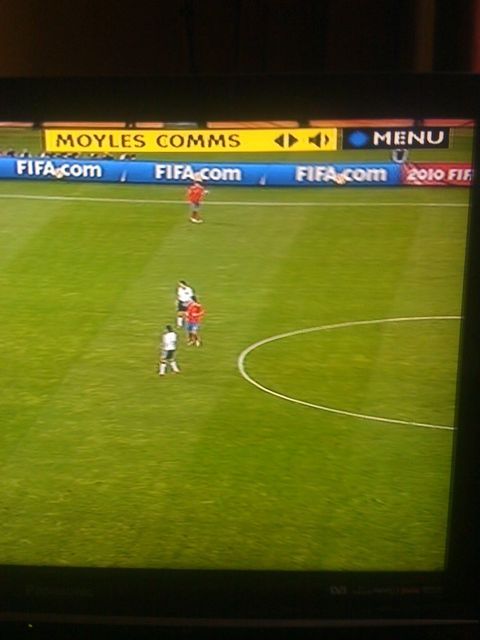
I’ve just watched the first half of the World Cup match between Spain and Germany and was listening to the alternative commentary by Chris Moyles for the Spain v Germany match.
This was a really clever idea (though shame it wasn’t on Freeview). Clever use of radio talent to provide something extra. This was squarely aimed at Radio 1 Chris Moyles fans. And it wasn’t really commentary. It was Chris doing what he normally does – with most of his audio props. It’s not something you’d necessarily watch if you were a real footy fan – but for someone with passive interest, this was great.
I noticed the BBC did something similar for F1 coverage last year – with a CBBC aimed alternative commentary. It was another way of extending the output to new audiences.
Of course, not everyone is a Moyles fan. But this was a really clever (and entertaining idea). Hopefully it won’t be a one off.
Last year, I remember being fairly lukewarm to the coverage online and on air for Capital FM’s Summertime ball.
This year they turned up the heat.
Everything about this year’s show was bigger and better. But in particular, how they interacted with the audience in the build up to the day.
Twitter was alive with #stball tweets all day. In fact – at one stage the event was trending in Twitter’s Top 10.
Capital kept listeners up to date with everything backstage, featured loads of user generated pictures, and threw up loads of videos from the performances the next day.
And most impressively, used new technology such as Radio DNS to keep my iPhone app and Pure Sensia up to date with images from the show – and additional information too.
Having worked on shows like this in a past, I know the enormous effort this sort of thing requires. Looks like Capital pulled out all the stops – and it showed.
And this video from DJ Earworm was a nice touch too. He’s the guy who did the clever United States of Pop Mashup in 2009.
I recently wrote that I’d been nominated for a Sony Radio Award. On Monday night, the awards took place in London, and my work for Puretonic Media and BBC Radio XTrails won a Bronze award. Very happy etc etc… A nice end to a year working at Puretonic Media – and a very nice start to the new job at the BBC.
Here’s the entry audio:
And Justin Kings at Newsleader Media Consultancy has some interesting thoughts about the Sonys here.







 JAMES STODD
.jpg)