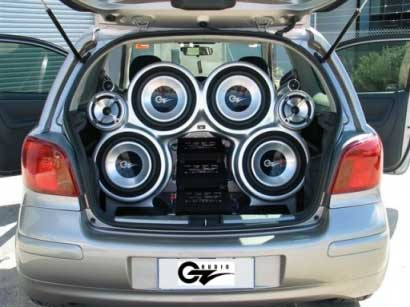
Bank Holiday In-Car listening.

Image: www.dailycaraudio.com

As the first of 2 mega, “phew whatta scorcher” bank holiday weekends drew to a close, there stretched in front of me a massive drive from the Southwest tip of Cornwall back home to London. To accompany the children’s cries of “are we there yet?”, the entertainment provider: the car radio. But what delights did it provide…?

Porthleven to Bodmin:
First up – Radio 1. They were featuring the 1Xtra takeover – great way of showcasing BBC Radio – but not many singalong songs for the 4 and 7 year old. So on came Pirate FM – seemingly playing a whole day of ” nothing but number ones”. Pirate FM certainly delivered on “more music variety” – this included Bucks Fizz “Makin’ Your Mind Up”, The Jam “A town called Malice” and loads more. Think the station has upped it’s game since I was last down in August. And enough singalong songs for the kids too. Not so sure the listeners really would care about the fact that the station is “voted number 1 in the Sunday Times Top 100 Smal Companies to Work For” in the news jingle every hour. But a nice award nonetheless.

Bodmin to Exeter:
As we lost Pirate Fm, a request from the back for “Times Table Challenge”. Those of you not to have yet had the pleasure of this or similar offerings from the Early Learning Centre have a treat in store. 30 minutes of repetitive educational “songs”. Note to self: get in car DAB fitted quickly – at least that way I could offer up Fun Kids. Though not sure what the kids will make of Breakfast with Jedward

Exeter to Ilminster A303:
It’s 5pm so time for PM on Radio 4. Sadly not Eddie Mair but informative as always. And then had to try and explain “why are they bombing Libya Dad?”> Note to BBC News – maybe there needs to be Newsround for Kids on the radio somewhere?

Tea stop:
Little Chef. Yes really. It’s one of the new ones with a Heston Blumenthal-inspired menu. I had fish and chips since you ask – but NO LOLLIPOPS. This is a #FAIL

Ilminster to M3
Back in the car, radio back on and on comes The Unbelievable Truth from BBC Radio 4. Then The Archers. Then a fascinating programme on Andy Wharhol’s last week in London from the Front Row team.

Megan (7) now asleep. Daniel (4) is still wide awake.

Switch to BBC Radio 2. It’s Jo Whiley tonight. Haven’t heard her since she had the free transfer from Radio 1 – and the music was great for an early evening drive. There were a couple of tracks that I’d loved to find out more about – but I was driving. Maybe my car radio needs a button that let’s me bookmark sings for further research or enquiry. Maybe Radio-Tag will help in the future? It was music by tUnE YaRdS – hard to describe but a good example of music curation as described by Nik Goodman last week.

Stonehenge:
Daniel needs the toilet. Quick stop, then he requests “Old McDonald” to be sung. For 20 minutes. He ended up with a lion on the farm… Carnage.

M3
Megan is now awake. She wants some songs she knows and asks for Capital FM. Thank God for disposable pop. It’s after 10pm – and the uncensored version of Rihanna S&M comes on. “Dad – the words are different..” Back to “Old McDonald then…
Search Me? Finding content in a search driven world

In a world of content – how can we expect people to find our great work?

I was intrigued by a session at Radiodays Europe last month presented by Jakob Bjur – the researcher in residence at Swedish radio. His presentation was based on a research paper he’d written on “Transforming Audiences – Patterns of individualization in Television Viewing”. It’s a weighty document and you can read it all here.

He made many interesting points, including the fact that “the content we deliver now falls into the web and is resocialised”. But he asked the question as to whether radio/sound now needs to be visualised in order to be found?

Think about it; you can search online for text and images and video, but sound is harder to search – unless it has loads of relevant metadata. Or maybe a full transcript?

As we consider the digital future, (or as someone put it today, the post Digital future), what content exactly do we want our listeners/audience to search out? And are we being far too prescriptive in how we categorise our content and how they consume it?

I’m not for a moment suggesting that our traditional, linear forms of broadcasting have had their place. Far from it. But in a world where our younger audiences are consuming 9 hours worth of content in less than 7 hours – ie using at least a couple of media simultaneously – should we be helping them find that content in a way that’s more suitable for their lifestyles?

Could we see a future where people could have an app on their smart phone that simply has a BBC search box – much like the Google search. It could learn who you are, what you like and give you it.

Maybe it’s a future where you select the type of content you want and it’s delivered to your phone – ready to consume on the way to work. But now, it’s not simply radio, but the funniest bits of last night’s Mock the Week, the must-see film from last week’s Top Gear, a video of the Taylor Swift Live Lounge performance, and the latest film review from Mayo and Kermode.

In short, I don’t care whether they are consuming Radio, or TV, or online content. I just want to make sure that, as future licence fee payers, and therefore our future audience, that they consume BBC content.

Or at least know that it’s there.

[Disclosure: Whilst I work for the BBC – these are my own views].

The Joy of 6 – new BBC 6 Music TV trail

This is the latest TV trail for BBC 6Music.  I particularly like the simplicity of the idea – all of the stations’ key talent actually building a radio station out of radios – and supporting the branding line of “building a digital home for music”.

TV ads/trails for radio stations are incredibly hard to get right.  Usually, it’s the simplest of ideas that work the best.

However, sometimes a simple idea doesn’t quite translate. Back when Capital FM rebranded first as Capital Radio and Capital 95.8, there was a TV ad that, whilst on paper looked great, in reality was a pretty hard watch. The idea was that Capital played music that made you want to nod along to it. The concept was great – that you’d see London from the viewpoint of someone listening to Capital on headphones  – but ultimately, was maybe asking just a little too much of the viewer.

Luckily, these days, Capital FM ads just do what they say on the tin – and BOOM – they work just fine!

The new sound of Radio 100 Copenhagen

Today, I’m in Copenhagen for Radiodays Europe 2011.

Yesterday, I took the chance to catch up with my friend Bjarke, who is the imaging director of Radio100 in Copenhagen. It’s a station I visited last time I was here – and I worked with the Programme Director Nik Goodman back when I was running the production team of the original Capital FM Network.

They’ve just launched an updated logo and refreshed on air sound – including a new station voice and new jingles – all composed and produced in-house. I was listening last night – and it has a really clean sound.

Here’s a quick video from Bjarke to show the thoughts behind the new sound – and an example of how it sounds on air.

Radiodays Europe 2011 #rde11

The case is packed. I’ve got a pocket full of Danish Krone. And I’m off to Copenhagen for Radiodays Europe  2011.

It’s the first time I’ve been to this European conference, though I spoke at Radiodays Denmark a couple of years ago, and am very much looking forward to experiencing the hospitality of this fine city. In fact, there’s a particularly nice bar round the corner from Radio 100 where @jamescridland, @newsleader and others enjoyed a nice variety of local brews. I’m also looking forward to catching up witha couple of old radio friends including Ryan Seacrest’s Executive Producer, Dennis Clark who I last saw when Ryan broadcast his show from Capital FM’s studios in London in 2007.

I’m on a panel entitled “Imaging and Branding – from strategy to successful branding” along with a number of other producers and presenters from the USA and Europe. I’ll include some insight from BBC Radio 1 and 2 about how their strategy feeds into their production – and how it’s more than just imaging and promos.

There’s one thing I’d have liked to show – but time precludes – and it’s this film produced by the agency PHD Worldwide. It was designed to stimulate marketeers about what our young audiences want from brands. And it’s a real eye opener. Nik Goodman wrote about it on his blog a couple of weeks ago – but if you haven’t seen it – it’s worth a watch.

So, if you are coming to RadioDays, hopefully you’ll come and say hello – or maybe Skål


Learn Radio (and TV) Production Skills for free from the BBC

BBC Broadcasting House, Portland Place at the ...
Image via Wikipedia

The BBC College of Production website  has just launched.

 Now, anyone – not just BBC staff – can get a basic insight in the skills needed to make great TV, Radio or Online content. There are profiles of jobs, background “how to” films and details of talks and training courses.

In the radio section, there are details of music scheduling, setting up microphones, making a trail for Radio 2, and the role of a station sound producer.

For budding TV producers, you can learn about self-shooting, special effects, developing programme ideas, and how to shoot on green screen.

And if you need to know more about blogging, there’s a section on that too.

It’s a vast (and I guess constantly evolving) resource. See more at http://www.bbc.co.uk/academy/collegeofproduction/

No more music buzz?

Universal Music Group
Image via Wikipedia

Sony Music and Universal Music have announced that from next month they will be simultaneously releasing some singles from their acts to radio and for sale online.

This will probably lead to articles asking “is music radio dead” and “why radio has no place in the music business”.

The music business is a commodity based one, reliant on shifting units (tracks/albums/downloads). As such, they need to make their products available wherever there is a customer base and demand. This change is feeding in to the “on demand” “right now” culture that we now find ourselves in. It was tested out pretty comprehensively during last years X-Factor where performances were available to download almost immediately after the show aired.

But does this mean anything for radio?

Previously, radio would play a large (though not exclusive) role in hyping demand for many singles and albums. The plugging arms of the record companies put much effort in offering exclusives, spot plays and playlist additions. These happened weeks out from release and added in to the highly planned pre-release publicity schedule including interviews, contest winner gigs, live sessions and much more. This record company pre-release marketing effort also provided much programming and contest content for stations.

This is purely another way of marketing the product. It means that the record companies (like everyone else) will need to work harder and smarter to target their consumers. They will probably make preview clips available online beforehand, and build up social media buzz in a highly targeted way. And the result will hopefully mean higher sales in the long run. And I’m sure radio will still get content driven promotions via the record companies – they may just need to come up with bigger ideas.

Image From http://www.pure.com/
For radio, it will be increasingly important to have links to technology that lets the listener “buy it now” – either through the station website, via mobile listening platforms, or directly from the radio via Apple or Pure Flow Songs. This technology already exists – but I guess it’s set to become all the more important – particularly for Commercial radio who can monetize their listeners.

And what if there were a station that could play the song you voted for – a sort of live jukebox service with an online presence on mobile devices? You could vote on the song, get it on air and buy it for your mobile device – all at the same time. Absolute Radio tried it with DABBL with new/live music.

This format exists now – to a degree – in the USA. It’s called Listener Driven Radio. How long before someone tries it again here?

Radio and the Australian Floods

You will have heard about the flooding
in Australia
. Radio stations and networks such as
Australia’s ABC have played a crucial role in reporting this
disaster and bringing communities together. In fact, this blog from an abc station
sums up what they are going through to bring their
listeners the information needed. I was speaking with a young
Australian radio producer, Nic Kelly, via email the other day and
he said he was working on an audio piece that would run on a number
of stations. He shared it with me last night. This piece is running
on roughly 30 stations around the country in the breakfast time
slot tomorrow morning including the RadioWest, SEA FM and STAR FM
networks in Australia – as well as a station called HOT 100 in
Darwin and a few others too. Take a listen: It’s amazing how words
and sound can sometimes express emotion more than pictures ever
can. And if you feel moved to donate to the Flood Relief fund, you
can do so here at http://qld.gov.au/floods

Is syndication really killing the radio star?

So, according to a report in today’s Media Guardian syndication of radio services is killing the radio star.

In a way, it’s true. Fewer stations or on-air shifts mean it’s harder for new entrants to break in. But many (including Global Radio‘s Ashley Tabor) would argue that there were many mediocre presenters on air anyway, so at least the new wave of “syndication” is improving quality.

Image By AndyBee21 (CC) Flikr

This article set me thinking though about whether this trend by Global and others may have actually increased opportunities for people to get into the new era of radio?

Capital Fm now has a 24 hour team of producers turning around content and links to keep the national feed of the service on air. They (along with the Heart network) also have a fairly large team of imaging and promo producers turning around everything from contest promos to local sponsorship ads. Sure, it’s may not have exactly the same levels of creative freedom that existed years back when I joined the original Capital Radio group. But if I was a new producer, currently in student radio and wanting somewhere to aim, this is a huge opportunity. An opportunity to learn the mechanics of how huge brand scale radio works – skills which are transferable across the digital marketing spectrum.

It’s also a fact that the global (small g) marketplace is continually shrinking. When I wanted to get into presentation and production, my only hope was to send out a demo (cassette) to various programme controllers. Now, I can start up a blog, share audio with colleagues worldwide online and maybe come up with and produce stunning visuals and share them on YouTube. The ease with which content and talent can now be showcased makes the world your marketplace.

And since Radio 2.0 is now where we are at – it’s the web/marketing/digital skills that are (almost) more important than the DJs themselves. I started my career striving to be a DJ. When I finally got on air, I was relatively successful but quickly became bored with a (then very loose) format. Presenters would kill for that level of freedom now. But even then, I could see that to survive, you needed to be able to do far more than just play the hits. S ave for a precious few, this is still the case.

And new talent is definitely out there.  As Clive Dickens noted in the article; “Student radio has become the new hunting ground for new talent”.  Having judged the Student Radio Awards for a number of years, I can only agree.

When I was at Puretonic Media, we found a new temporary producer – Andy Jackson – who very quickly became full-time. He’d only worked on a very small station in The Wirral. But he had immersed himself in radio online, read loads of blogs/ sites/ articles. And had amazingly creative production skills. And, more importantly, was willing to learn.

And through this blog, I’m in contact with producers around the world who ate equally striving to make it.  One such producer is just 15 years old – Nik Kelly. Already creating imaging on a national night show in Australia. And gaining attention of the international imaging guys at Benztown Branding in the process.

So if syndication IS killing the radio star, it may also be providing many new opportunities in the process. But you have to be prepared to find them. And maybe adjust your skills accordingly.