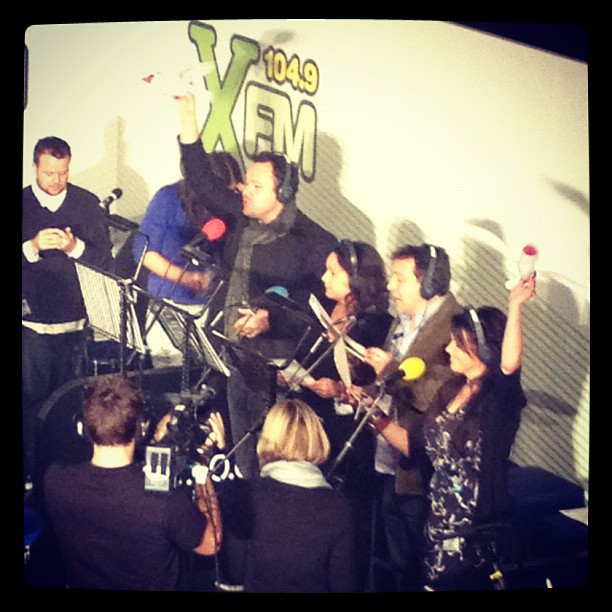
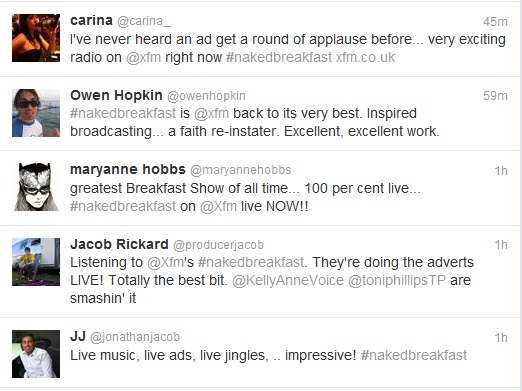
They took the Danny Wallace show and broadcast live from the O2 Shepherds Bush Empire. But what made this different is that they did everything live. This wasn’t simply a normal outside broadcast with some live links and special guests. Everything was be live – the music, the jingles, even the adverts.
I’m not sure I’ve ever heard of anything being done in quite this way in the UK. It would have been fairly common back in the early days of Commercial Radio in the US in the 1940s and 50s when it was common for the announcers to voice live ads within live shows. But doing something like this on a very formatted station like XFM is quite a challenge.
I’m guessing they’ve had to carefully plan what airtime was sold within the show. Because they had to perform the ads live – they had to sell some brave creative to the advertisers too – so that the ads became part of the performance.
Whilst it’s not something you’d want to hear every day – this is a great example of creative programming that gives the listener something to really interact with. You can listen again to it here:
I believe the progressive devaluation of radio creativity is in great part down to the radio industry itself. Whereas it should be actively encouraging creativity, its own systems run directly counter to this.
I have often worked alongside some huge advertising agencies. Some of them “get” radio and some don’t. And their “big ideas” (often TV based to tie in with big TV campaigns) aren’t necessarily always big enough for radio. We normally help them get to a good place – it’s a bit of a collaborative process.
We make great efforts to help these agencies to understand radio, and also the uniqueness of BBC radio. A snall number of the people I meet admit they don’t listen to radio at all. So education in what’s special about radio is often needed.
We bring them in for creative sessions, take them into the radio networks to see how radio is actually created. It’s a two way process, and needs to be collaborative. But with persistence, it can pay off too.
In answer to John; I feel your pain – particularly with some smaller scale local advertising.
Stations are to blame in this – but sometimes it’s down to a lack of understanding by advertisers. There is a need for radio stations to educate their clients, and it seems the RAB are doing a lot to assist in this area.
But it’s down to educating sales teams too. And if they don’t have a love for the medium – we’re stuffed.
Trevor Dann, speaking at the conference yesterday, was discussing how incomplete the archives of many broadcasters are. The BBC has a huge archive – but much is missing. In the past, there hasn’t been so much value placed in maintaining archives.
Archives = space. Space costs money.
When I worked in Leicester Square, what archives there were, were kept in the record library by the very knowledgeable librarian Clive Smith. Once he left, who knows what happened to them?
Luckily, there have always been a band of “enthusiasts” who have taped radio stations off air and filed the results away. This site seems to be a fairly large archive.
So whether you want to hear what Capital FM used to sound like, or how Atlantic 252’s Test transmissions turned out – along with airchecks from across the pond, this site may be worth a listen.
Radio in the past wasn’t necessarily better. But if you haven’t heard much of it, this could give you a snapshot.
Loads of “suits” talking the same old stuff that pours out of “industry” gatherings? Great ideas that are all well and good if you have huge budgets and unending resources? Or something else?
It’s designed for people who like radio, who want to be inspired by new ideas, who recognise that technology will help it to change and adapt and for those who want to meet like minded people.
I’m hugely looking forward to this conference. And I’m really glad that James Cridland and Matt Deegan are putting it on. This promises to be a great place for discussing new ideas, looking at things in a new way, and making new contacts. If I was starting out, this would be the place I’d be heading; loads of people who actually “do” radio thinking about how we can make radio better.
And there is a future for radio.
Sure, there’s lots of doom-laden statistics floating around about how younger listeners are failing to engage with radio. But not all of them. And only if radio refuses to engage with them, interact with them on the platforms that they hang out on, and actually deliver them the content they want to hear.
And radio still is radio. But it can be enhanced in many different ways. And let’s face it, whilst some people may sneer at the many ways that stations like Radio 1 and others have used to “visualise” radio, what they are doing now is really just a natural extension of what has been done in the past. From meeting listeners at the County show or the Radio 1 Roadshow at Great Yarmouth Beach, to the BBC radio Solent magazine that I remember buying as a child – they are all ways of extending the reach of the radio station.
But the biggest positive I have taken from the last few months is that fact that my daughter (8) has now decided that she wants to be on the radio and maybe run her own radio station.
This interest was started when she came to visit me at work way back when I was at Capital FM. She was 3 – and recorded 3 links which we made into a radio show for her to play in the car. She was also fascinated last time that Radio 1 did their Access All Areas week – as can be heard in this recording as she describes watching Newsbeat going out online.
Now, she has taken it one step further. Over the last few weeks, she has been recording her own radio show. She brainstormed what sort of features she wanted to run, what music she wanted to play (mostly the Capital playlist) and even how she wanted to broadcast (she wants to be on Red Button and can’t understand why it’s a bit complicated to make that happen).
She’s now started to learn how to make a radio show – in basic form using Garage Band to drag in songs and record her links. She’s even recorded a report from her day out at Brands Hatch a few weeks ago. Now whilst this isn’t necessarily radio in its truest form, it’s no different from back when I was her age, where I recorded the ads and jingles off Radio Victory, and sat in my bedroom playing tunes off a battery powered record player, talking to no-one except my brother, and playing in ads from an old mono cassette recorder. The difference is, now, that I can record her and share a little of it with you.
So, it’s a bit rough around the edges. But she wrote the jingle, recorded the keyboard part, selected the samples and the instruments and the sound effects. And she loved it.
Maybe Next Radio or an event like it will inspire her in the future to do it for real. But only if we all help make it a reality for Megan and her Generation – and keep making radio a medium that is relevant to them as well as us.
You can follow all things nextrad.io on Twitter @thisisnextradio and the conference hashtag is #nextradio Radio Today are covering it live here. I’ll be there, doubtless tweeting interesting bits. If you’re coming, it’ll be nice to catch up – and if you’re not, hopefully you’ll learn something useful.
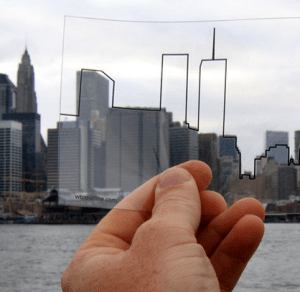
I remember what I was doing on 9/11. I was at work at Red Dragon FM in Cardiff. When the news started breaking we were in a state of disbelief. We broke format and started having regular news updates. We took off all production and changed the playlist to remove inappropriate songs.
Someone recently asked me for examples of any on air production or imaging that we ran during that period, and to be honest, I have no recollection of us doing anything specific. I think we stripped everything back and felt our way through it. In the US, stations ran powerful montages. For us, it was their story – which involved us.
The same thing happened during the London bombings, whilst at Capital FM. We broke format, becoming a rolling news station – along with the other stations coming out of Leicester Square. I can’t recall us running anything in terms of production. Why would we – the emotional shock was so raw.
Today, I came across this very powerful visualisation from the New York Times – combing a large number of recordings from the day – from Flight Controllers, to the military, to someone who was on one of the planes. It plays alongside an animated timeline and transcript of the audio. I think this is a very powerful way of telling the story. No visuals are needed – it’s simply the power of words.
You might also be interested to see this video with Lee Harris of 1010WINS in New York City, who was on air at the time the planes hit the Twin Towers. Skip to 3:51 in to find it..
I’m a bit of a fair-weather listener to Absolute Radio. I listen to Christian O’Connell as the mood takes me but I don’t tune in every day. I tend to listen to the offshoots of AbsoluteRadio90s and Absolute80s more. I also have their OC Alarm Clock app and the Rock and Roll football app on my phone. And it’s the latter that has sparked an idea..
When I installed that app, I was asked to nominate the team I support. I’m not really a footy fan but my father in law is a season ticket holding life long Manchester United fan so I selected them. Then I forgot about it.
Now, every time they play a match and score a goal – whether or not the app is being used – my phone flashes up a goal update. I might be watching Tv. I might be surfing online. It flashes me a message. It interacts with me.
Is this an opportunity for other radio station apps? Could the Capital FM app do this? Could it ask you to input your favourite artists. Or the sort of things you are into. Or your lifestyle interests?
Then, when The Wanted were in for a chat – could it directly notify me? (I’m not a fan but my 8 year old daughter is). Or when tickets for the Summertime Ball went on sale, could they send me (her) a reminder..?
As the technology of mobile listening changes – are you thinking beyond linear listening..?
Here in the UK today (June 22 2011), BBC Radio 2 is trying out a clever marketing trick.
They are pairing up all of the presenters from different shows and genres to present in different parts of the day. It’s being described as “a-12 hour on air celebration of everything the station has to offer”.
For a station like Radio 2, 2DAY gives a great opportunity to showcase the range of what they offer to listeners who may only tune in for certain parts of the day. Of course, there’s a danger that having hooked people in, they’ll come back expecting the same every day. But at least they’ll have heard a sample of everything else that the station offers. And that will hopefully make them want to sample more. For the people who complain that the BBC wastes resources promoting the mainstream offerings from their radio stations, this is a nice example of using the mainstream presenters to help showcase the outer parts of the schedule.
I really like the style of the TV trail that they have created to promote it too. It’s a bit like one of those children’s puzzles where you slide the pieces around to finally get the full picture. It’s a nice visual metaphor and resolves with all the presenters on it as well.
This morning, BBC Radio 1 refreshed the sound of its news bulletins. You can hear how it sounds on Newsbeathere. The previous package had been on air since around 2006, so a refresh was probably overdue. I’m sure there will be lots of discussion on some forums – but I think it works really well. It sounds fresh, contemporary and fits the current direction of the station.
The new sequence features the phrase “Listen, Watch, Share” – which itself received 30 minutes or so of discussion from Chris Moyles at the start of today’s show. The logic is simple – and fits with the strategy of Radio 1. It’s now as much about online as it is about radio. And there are opportunities to “share” all over the Radio 1 website. Though strangely, on the Radio 1 new pages you can only “Bookmark”.
Moving the “audio furniture” of any radio station is harder than you think. Listeners are used to familiarity and routine. Since a lot of radio listening is fairly passive/ in the background, when something changes, it doesn’t sound right. When stations change presenters, some listeners get annoyed. When stations rebrand or become part of a network, some feel like they have lost some local identity. And sometimes, when changes are proposed, the audience can get very vocal – such as when the Radio 4 controller decided to change the theme to a long running feature.
At some of my previous stations, loads of thought was put into how any changes on air happened. And in some, the mantra was “get it on air – they’ll get used to it”. At Radio 1, I’m guessing the change will have been carefully considered, piloted and refined.
And if you want to “share” this – the buttons are below..
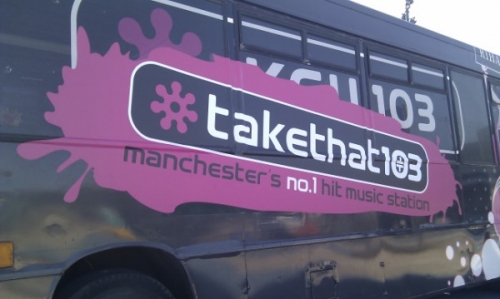
Here in the UK, Manchester’s Key 103 has taken a break from playing non stop Gaga/Bieber/Perry to become TakeThat103 for one day only to celebrate the band’s return to the city 16 years since they last played there.
“Flipping format” is nothing new to the UK. Before becoming Glide FM, Oxford’s FM 107.9 became Glee FM. And in the US, stunts like this happen all the time .
In Australia, they do it a different way – creating pop up radio stations to celebrate specific days or events – such as ABC Woodstock (to celebrate the 40th anniversary of Woodstock) or ABC Beatles (a weekend of documentaries to mark the 40th anniversary of the break up of the band).
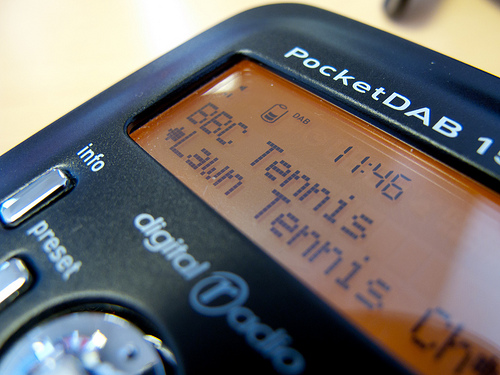
Photo:AdamBowie on Flickr (cc)
The BBC did something similar last year with BBC Tennis – as Adam Bowie notes here.
When I worked in South Wales, we once even created an extra station for Red Dragon FM in Cardiff to support the first year of the staging of the Wales Rally GB. The station – Red Dragon Rally FM- ran as a separate station – taking Red Dragon programming overnight and flipping to rally news and background interviews with a more rock oriented music policy.









 JAMES STODD