BBC Radio 2 – Radio2Day

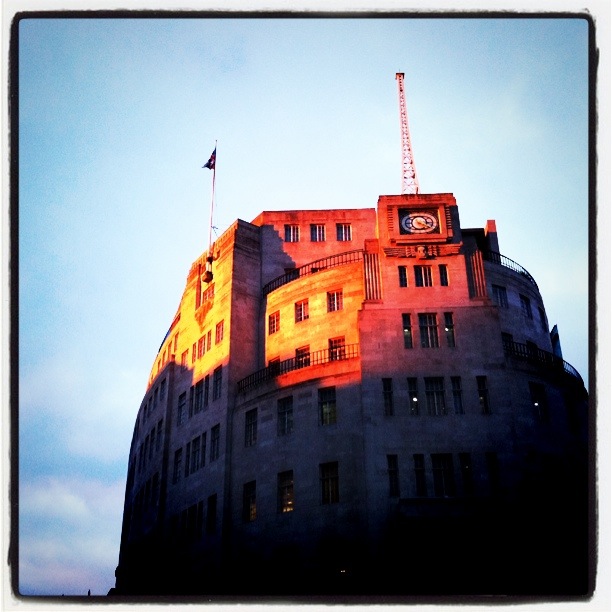
Broadcasting House Sunset - James Stodd

Here in the UK today (June 22 2011), BBC Radio 2 is trying out a clever marketing trick.

They are pairing up all of the presenters from different shows and genres to present in different parts of the day. It’s being described as “a-12 hour on air celebration of everything the station has to offer”.

For a station like Radio 2, 2DAY gives a great opportunity to showcase the range of what they offer to listeners who may only tune in for certain parts of the day. Of course, there’s a danger that having hooked people in, they’ll come back expecting the same every day. But at least they’ll have heard a sample of everything else that the station offers. And that will hopefully make them want to sample more. For the people who complain that the BBC wastes resources promoting the mainstream offerings from their radio stations, this is a nice example of using the mainstream presenters to help showcase the outer parts of the schedule.

I really like the style of the TV trail that they have created to promote it too. It’s a bit like one of those children’s puzzles where you slide the pieces around to finally get the full picture. It’s a nice visual metaphor and resolves with all the presenters on it as well.

Bringing the Summertime Ball Alive

Image (c) Global Radio

Yesterday, Capital FM hosted its Summertime Ball at Wembley Stadium for 75,000 rain-soaked fans with acts ranging from JLS and Nicole Scherzinger to The Wanted and Jennifer Lopez.

I spent the weekend in Cardiff, once home to another similar event when Red Dragon FM was around. Cardiff is now one of the cities that has Capital FM as its own radio station. And this weekend in Cardiff it was all about the Ball. And even though the event was over 2 hours away in London – it still sort of felt local. All the local shows talked about was the fact that they had last-minute tickets to give away. All the news bulletins led with the Ball – with a reporter backstage and loads of quick relevant scene setting. And on Sunday morning when Cardiff was being soaked in a torrential downpour, the local host had upbeat, excited callers on, getting ready for “South Wales’ road trip to the Ball”.

In fact, the weekend served as a warm up for Take That’s arrival in Cardiff – an event that it seems is so anticipated that one local fashion advertiser has themed their local campaign around the band’s arrival.

My personal road trip home from Cardiff joined coverage of the Ball at about 4, and it was good to hear Capital throwing everything at it – from backstage reporters to “live” interviews along with (somewhat surprisingly) live tracks too. Live performances are hardly ever as good as recorded ones , so this felt a bit of a brave move for Capital. But as a passive listener, it made me feel part if the show. They were also making much of the HD photos available online along with video interviews. And I’m sure they will be hammering home the amount of online content (both photos and video) available for listeners to check out in the next few days.

Little is made of the backstage effort made to make this sort of thing happen. I know there will have been a fairly small team of hugely dedicated people working long hours to make this happen from engineers to online editors to producers. Maybe Global should shout publicly about this a little more – they should be proud of the team.

But, the moment I heard Capital FM’s Greg Burns link to someone high above London in the Flying Eye describing the sight of the stadium and the bands arriving, it felt like Capital had really nailed it. I’m uncertain whether the Flying Eye is still even in existence on air on Capital. But it is radio shorthand to Capital’s past that still exists in the collective memory (certainly for the older part of the audience). It’s a simple device to paint pictures and create context. And it was a nice subtle link to Capital’s past heritage too.

I want it all (and maybe iCloud will give it to me now) UPDATE

Back in 2009, I wondered whether one day I’d be able to listen to what I wanted, when I wanted it on my commute to work. I wondered whether I’d be able to switch on my portable device and get the latest news, the latest weather and maybe a selection of content alongside the music I wanted.

Yesterday’s announcement by Apple of the new iOS and also iCloud made me think that maybe this idea could be getting nearer. It looks like, along with allowing me to sync up anything I’ve bought from iTunes, by using iTunes Match, I’ll be able to (at a small cost) match up what I already have on iTunes and sync it with the cloud.

But, surely, there’s more to it than that. From what I understand, and I may be wrong), I’ll be able to sync my iphone up wirelessly with my library. So I’m hoping that since my library not only contains music but also podcasts, that they will sync as well.

If this is the case, this surely offers some interesting options for radio broadcasters.

In a post yesterday, Radio Intelligence asked “is podcasting radio’s enemy?“. The conclusion is that it’s not – but there are some broadcasters who still disagree.

It would be oh so nice if the radio trades spilled some digital ink on these types of broadcasters rather than creating the impression that radio can simply step into a tricked out DeLorean where it’s always 1999.

There has been much discussion of how radio still has a place within the music industry. One of these roles is that of Music Curation. This could be as diverse as new music from Radio 1, or Capital FM bringing you the latest hit record first. Does this always-synced future from Apple now mean that Capital FM should be publishing Smart iTunes playlists that contain the weeks new releases? If you are a Capital fan, you could have this on your iTunes account. Each week, as it syncs, it would show you the new songs that Capital has added – and that you could then buy (maybe with a nice partnership deal for Capital and Apple to get a share of revenues).

But there’s more. If my iPhone now syncs podcasts, couldn’t Capital FM produce a daily podcast that is in effect a topical call to action, a setup of an online-only contest entry or quick excerpt of that days big guest from the breakfast show. Maybe there could be a series of short “blipcasts” – no longer than 60 secs – that have a showbiz update or maybe a daily contest. If there were a way to combine this into a smart playlist with the biggest songs from the Capital playlist – then maybe there’s a way of reaching potential Capital listeners who don’t listen on the move.

And, (thanks to Radio Intelligence for the Twitter suggestion), I’d call it Capital Fm On Demand

Now whilst this may not be possible yet – and indeed the iCloud may not yet offer this – maybe my hoped for future is starting to get nearer.

Moving the (audio) Furniture

What happens when your favourite station changes its furniture – be that it’s jingles, it format, it presenters or even its name?

Photo by @delrico http://yfrog.com/h8mvhegj

Photo by @delrico http://yfrog.com/h8mvhegj

This morning, BBC Radio 1 refreshed the sound of its news bulletins.  You can hear how it sounds on Newsbeat here. The previous package had been on air since around 2006, so a refresh was probably overdue. I’m sure there will be lots of discussion on some forums – but I think it works really well. It sounds fresh, contemporary and fits the current direction of the station.

The new sequence features the phrase “Listen, Watch, Share” – which itself received 30 minutes or so of discussion from Chris Moyles at the start of today’s show. The logic is simple – and fits with the strategy of Radio 1. It’s now as much about online as it is about radio. And there are opportunities to “share” all over the Radio 1 website. Though strangely, on the Radio 1 new pages you can only “Bookmark”.

Moving the “audio furniture” of any radio station is harder than you think. Listeners are used to familiarity and routine. Since a lot of radio listening is fairly passive/ in the background, when something changes, it doesn’t sound right. When stations change presenters, some listeners get annoyed. When stations rebrand or become part of a network, some feel like they have lost some local identity. And sometimes, when changes are proposed, the audience can get very vocal – such as when the Radio 4 controller decided to change the theme to a long running feature.

At some of my previous stations,  loads of thought was put into how any changes on air happened. And in some, the mantra was “get it on air – they’ll get used to it”. At Radio 1, I’m guessing the change will have been carefully considered, piloted and refined.

And if you want to “share” this – the buttons are below..