Be Brave. Be Bold.

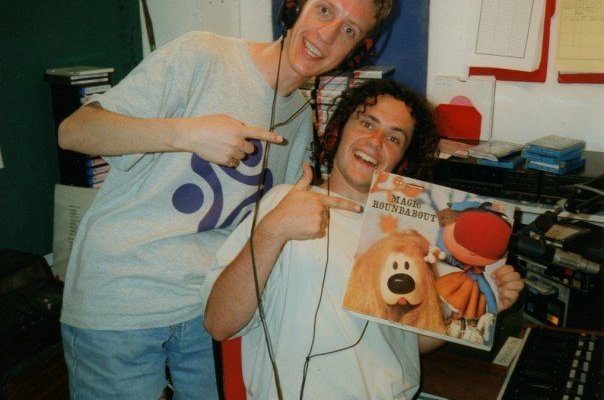
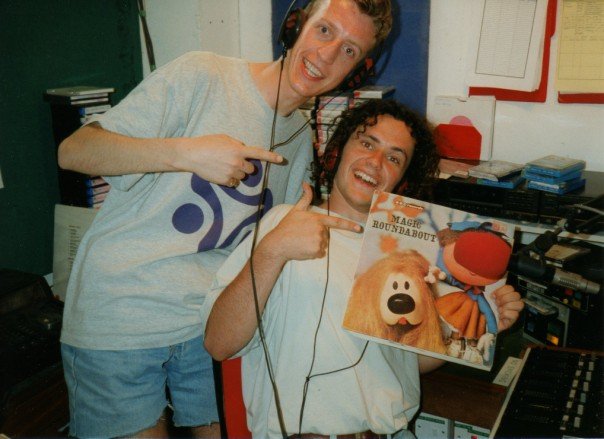
James Stodd & James Rennie - C4 Radio Canterbury Summer 1992

There are some things that you need to see.And some you don’t.

Me in shorts with a dodgy haircut is fairly inexcusable. But it was when I was a student. And that makes almost anything forgiveable (apart from wearing headphones on a photo shoot).

This photo was taken during the Sunday lunchtime show that James & I used to do on C4 Radio in Canterbury (now long gone and part of CSRfm). The programme was called “Crucial FM” (ripped off from the name of a Lenny Henry show sketch). It featured music, talking rubbish, stories from the Magic Roundabout and other old records we found in a second hand record shop in town.And occasionally the appearance of 2 characters called “Pat and Val”(loosely based on the cleaners who used to clean our halls – Thorne Hall if you really want to know).

This was the Summer of 1992. That was the year I spent my summer working as the Management Runner at BBC Radio 1. That was the year that I blagged the most free CDs and gig tickets ever. That was the summer that I paid daily visits to McDonalds on the “bloat up” run for Steve Wright. That was the year that I took Simon Bates’ dry cleaning to the dry cleaners. That was the year I won my Student Radio Award.

It was a very long time ago.
My Original Student Student Radio Award (with others)

My prize for winning the award was a box of CDs (there was a Jimmy Nail CD in there) and a lovely certificate. I still have the certificate. It sits in our home office next to a few other awards and my Doctor Who picture. (Who has always been cool ever since the time I met Tom Baker aged 6. End of).

Tonight (November 9th 2011), this years Student radio Awards take place at the IndigO2.

There is some debate about the history of the awards. Before the SRA there was NASB. I’m sure something happened at some point and it was disbanded. I remember attending a meeting when the SRA was set up. It may have been at Hatfield Uni. It may have been in Hull. Whatever the history,the Student Radio Awards have been around in a few guises for a number of years. And winning one, even back then, meant a huge amount.

This is a Cassette. Better than Minidisc.

I still have my entry. Luckily for you (and me) it’s on antique technology. No, it really is. This kids is a cassette. It’s what we used to pirate songs off the radio before the Internet. I listened to it a couple of years ago – and it was pretty average. But back then, being a DJ was what I wanted to be. And Student Radio let me do it.

The problem with student radio is that many people now, like me then, wanted to emulate what is curently on the radio. Back then, when I ran the station, I wanted it to sound like the local commercial station. I had jingles from America. I had an American Voiceover. And there was a team of specialist DJs who hated all of that and wanted to do things very differently.

I wish I’d have listened to them.

Student Radio can be about making the station sound  the best it can be. It can be about being the best presenter. But  what it really offers is the opportunity that you may never get in a professional radio career.; to experiment and fail. To try new things. To experiment. It may well give you more creative freedom than you’ll ever get in the real world. But, hopefully, it’ll allow you to create something new and inspiring to those people currently running radio.

One of the reasons I’ve been a judge for the last few years is that I think these awards have such a huge ability to encourage potential. The fact that Radio 1 and much of the UK’s commercial radio support them is testament to that. I’m looking forward to meeting some of the new winners from this year; who knows where they will end up?

So to all of you nominated at the awards this year and to all of you aspiring to succeed in the coming years; be brave; be bold. And most of all, never have a publicity photo done with you wearing headphones.

What’s your Red Cup?

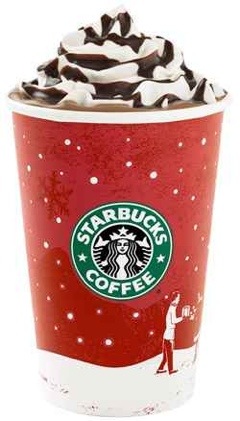
The Red Cups are about to return in Starbucks branches around the world.

20111103-081230.jpg

For years, every Christmas, Starbucks have added the red Christmas Cups to their stores with a number of special Christmas flavours. Christmas music appears in the stores (they also sell the CDs) and it feels a little bit closer to winter. Over the past few days, the number of mentions of Red Cups in my Twitter feed has been increasing. I’ve noticed loads of video ads at Underground station telling me the Red Cups are Coming. There’s even a dedicated websitefor them counting down to the big day. It feels like Starbucks (just like Coke Christmas ads ) are doing their best to “own” Christmas.

In the UK, Smooth Radio have  again launched Smooth Radio Christmas – non stop Christmas songs and a great way to cross promote to Smooth Radio. I’m guessing the thinking is that people who don’t necessarily think that Smooth Radio is for them might like a Christmas station. Add in some cross promotion and hopefully gain some listeners.

Christmas stations are nothing new. There are loads online. Many AC format stations in the US flip format in November and December to do the same thing. In Denmark, Radio Soft – sister station to Radio 100 becomes all Christmas too.

But can Starbucks teach us anything about brand extensions?

The Red Cups work because they tie in with a specific time of the year where it’s easier to create a Mood. I’m not sure Starbucks summer cups would have the same effect.
With radio, it’s easier to do brand extension with musical decades (such as Absolute 80s and the like).

But whatever happens – in a crowded (coffee) market, the sight of the Red Cups instantly makes me think of Starbucks and Christmas.

So what’s your Red Cup moment?

Educating advertisers: avoiding the “creative abyss”.

Photo by James Stodd on Instagram

Does radio really suffer from a “creative abyss”? Are there a lack of ideas? (hence the tenuous light bulb reference..)

Long time radio commercial producer John Mountford, from commercial production house JMS thinks so.

You can read his blog post here .

In the post he says;

I believe the progressive devaluation of radio creativity is in great part down to the radio industry itself. Whereas it should be actively encouraging creativity, its own systems run directly counter to this.

I have often worked alongside some huge advertising agencies. Some of them “get” radio and some don’t. And their “big ideas” (often TV based to tie in with big TV campaigns) aren’t necessarily always big enough for radio. We normally help them get to a good place – it’s a bit of a collaborative process.

We make great efforts to help these agencies to understand radio, and also the uniqueness of BBC radio. A snall number of the people I meet admit they don’t listen to radio at all. So education in what’s special about radio is often needed.

We bring them in for creative sessions, take them into the radio networks to see how radio is actually created. It’s a two way process, and needs to be collaborative. But with persistence, it can pay off too.

In answer to John; I feel your pain – particularly with some smaller scale local advertising.

Stations are to blame in this – but sometimes it’s down to a lack of understanding by advertisers. There is a need for radio stations to educate their clients, and it seems the RAB are doing a lot to assist in this area.

But it’s down to educating sales teams too. And if they don’t have a love for the medium – we’re stuffed.

The Art of the Title Sequence

The Art of The Title

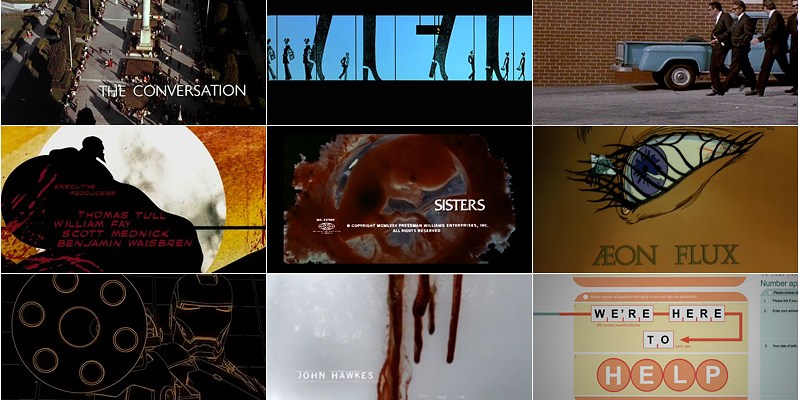
I came across this site this week. It’s got nothing at all to do with radio. And lot’s to do with visual design.

It’s a site which showcases great Film and TV title sequences and the work that went into them. Maybe by watching some of them , it will get your creative juices flowing. These examples are all about the visual ideas. Imagine how any of them could be created simply by using sound.

And if not – just enjoy them for their great visual playfulness.

Utilising User Generated Content

Photo (C) Metro
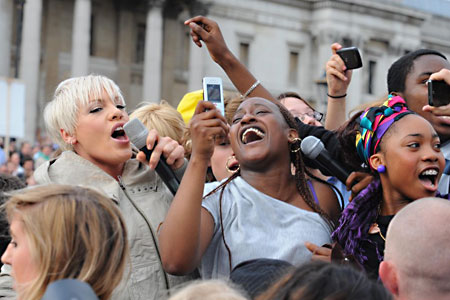
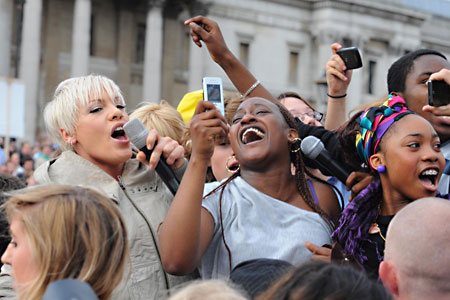
Here’s a fantastic example of using user-generated content to make a really interesting looking TV spot for BBC Radio 1’s Teen Awards. It’s a simple idea – but executed really nicely.

Vodpod videos no longer available.

There’s a little more background on the Earshot Creative review blog here.

I think there are huge opportunities for making great sounding, highly effective promos and imaging using this method. There are countless examples online of contests where bands have let fans download elements from their songs to create alternative mixes. There are also examples of online games where fans can “create” their own programme trails – like this one for the BBC’s Doctor Who from a few series back.

So – how about someone publishing some imaging elements online and giving their listeners the chance to create the idents for the station. Just imagine the creative treats that might emerge.

Aircheck Archives

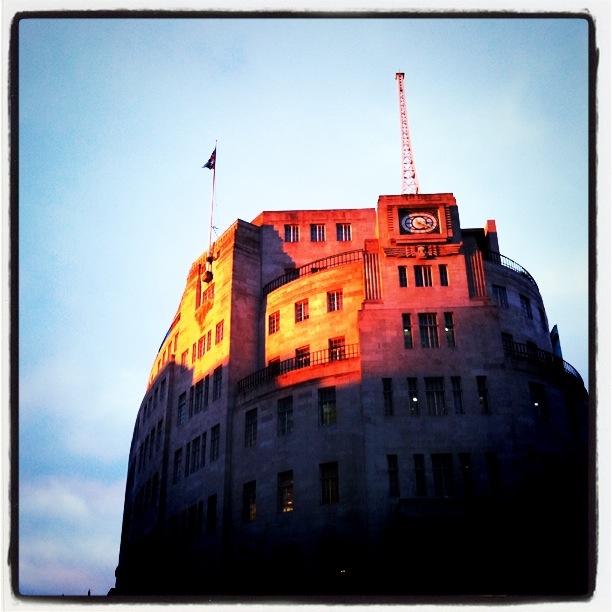
20110916-090228.jpg

My friend Simon Beale from Heart London alerted me to this site last night whilst in the pub after the excellent Nextrad.io conference.

http://www.aircheckdownloads.com/

Trevor Dann, speaking at the conference yesterday, was discussing how incomplete the archives of many broadcasters are. The BBC has a huge archive – but much is missing. In the past, there hasn’t been so much value placed in maintaining archives.

Archives = space. Space costs money.

When I worked in Leicester Square, what archives there were, were kept in the record library by the very knowledgeable librarian Clive Smith. Once he left, who knows what happened to them?

Luckily, there have always been a band of “enthusiasts” who have taped radio stations off air and filed the results away. This site seems to be a fairly large archive.

So whether you want to hear what Capital FM used to sound like, or how Atlantic 252’s Test transmissions turned out – along with airchecks from across the pond, this site may be worth a listen.

Radio in the past wasn’t necessarily better. But if you haven’t heard much of it, this could give you a snapshot.

What’s Next (for) Rad.io?

So, apart from a clever name, what will the Next Rad.io conference bring us?

Loads of “suits” talking the same old stuff that pours out of “industry” gatherings? Great ideas that are all well and good if you have huge budgets and unending resources? Or something else?

It’s designed for people who like radio, who want to be inspired by new ideas, who recognise that technology will help it to change and adapt and for those who want to meet like minded people.

I’m hugely looking forward to this conference. And I’m really glad that James Cridland and Matt Deegan are putting it on. This promises to be a great place for discussing new ideas, looking at things in a new way, and making new contacts. If I was starting out, this would be the place I’d be heading; loads of people who actually “do” radio thinking about how we can make radio better.

And there is a future for radio.

Sure, there’s lots of doom-laden statistics floating around about how younger listeners are failing to engage with radio. But not all of them. And only if radio refuses to engage with them, interact with them on the platforms that they hang out on, and actually deliver them the content they want to hear.

And radio still is radio. But it can be enhanced in many different ways. And let’s face it, whilst some people may sneer at the many ways that stations like Radio 1 and others have used to “visualise” radio, what they are doing now is really just a natural extension of what has been done in the past. From meeting listeners at the County show or the Radio 1 Roadshow at Great Yarmouth Beach, to the BBC radio Solent magazine that I remember buying as a child – they are all ways of extending the reach of the radio station.

But the biggest positive I have taken from the last few months is that fact that my daughter (8) has now decided that she wants to be on the radio and maybe run her own radio station.

This interest was started when she came to visit me at work way back when I was at Capital FM. She was 3 – and recorded 3 links which we made into a radio show for her to play in the car. She was also fascinated last time that Radio 1 did their Access All Areas week – as can be heard in this recording as she describes watching Newsbeat going out online.

Now, she has taken it one step further. Over the last few weeks, she has been recording her own radio show. She brainstormed what sort of features she wanted to run, what music she wanted to play (mostly the Capital playlist) and even how she wanted to broadcast (she wants to be on Red Button and can’t understand why it’s a bit complicated to make that happen).

Radio Victory Car Sticker

She’s now started to learn how to make a radio show – in basic form using Garage Band to drag in songs and record her links. She’s even recorded a report from her day out at Brands Hatch a few weeks ago. Now whilst this isn’t necessarily radio in its truest form, it’s no different from back when I was her age, where I recorded the ads and jingles off Radio Victory, and sat in my bedroom playing tunes off a battery powered record player, talking to no-one except my brother, and playing in ads from an old mono cassette recorder. The difference is, now, that I can record her and share a little of it with you.

So, it’s a bit rough around the edges. But she wrote the jingle, recorded the keyboard part, selected the samples and the instruments and the sound effects. And she loved it.

Maybe Next Radio or an event like it will inspire her in the future to do it for real. But only if we all help make it a reality for Megan and her Generation  – and keep making radio a medium that is relevant to them as well as us.

You can follow all things nextrad.io on Twitter @thisisnextradio and the conference hashtag is #nextradio  Radio Today are covering it live here. I’ll be there, doubtless tweeting interesting bits. If you’re coming, it’ll be nice to catch up – and if you’re not, hopefully you’ll learn something useful.

Owning events on air – The Rugby World Cup 1999 in South Wales

The Millennium Stadium, Cardiff (Welsh: Stadiw...
Image via Wikipedia

The 2011 Rugby World cup is now fully underway in New Zealand.

Back in 1999, it came to South Wales. It was an unusual championship, since not all of the matches were actually played in South Wales. In fact, some were played in England. One thing that struck me about the Welsh rugby fans, when I moved to Cardiff in 1998, was their passion for the game and their huge sense of National pride.

This event gave Red Dragon FM a huge opportunity. We had NO rights to be associated with the rugby world cup. And we never claimed to have any rights. But it was an event that took over the city, South Wales and was a huge topic of conversation.

At the start of the year, we had a huge brainstorm about what we could and couldn’t do. We had a rolling planner detailing key dates, key events and a countdown to the start of the championship. And of course, it provided a brilliant sales opportunity – both for sponsorship and for the sales team to book rugby related commercials,

We commissioned printed banners – one side saying “TRY” and one side saying “MISS” – both sides heavily branded – which were given out in their thousands during the first few matches. The result was that almost every time there was a goal or a miss, there were shots on TV across Wales, across the UK and around the world of the Red Dragon FM logo. In fact, if imitation is the best form of flattery, we ended up being banned from giving these cards out, and some of the key sponsors introduced them for later matches.

On air, things started early. We started counting down to the championships every day, early in the year. We already had good relationships with the Welsh Rugby Union, a number of the rugby team had connections with the radio station and the contacts with the local authorities put us in a good position to get relevant permissions to do things.

Each match day, we broadcast live from outside the millennium Stadium. We had teams of promotional crew giving out material. And we recorded hundreds of vox pops with Welsh listeners, which we used in all our imaging and promos. And we updated these daily, if not hourly, particularly after a great win or a heavy defeat. Prior to the World Cup, we recorded interviews with a large number pf the Welsh squad. We used these in news bulletins, within promos and they also guest hosted the “Top 10 at 10” on match days – picking their songs and describing their thoughts as they prepared for the big games.

As the campaign progressed, we even created a long form production piece that played a couple of times a day, featuring vox pops of players and fans. I very much doubt whether it’s the sort of thing that would sit comfortably on air on many stations these days. But there are some elements that would still work…

Never underestimate the power of passionate, vocal listeners. I’d never argue for using them simply to get voices on air, but when there’s a reason, it can be very powerful. I’m looking forward to hearing some great examples from the other side of the world in the weeks to come..

Visualising 9/11 Audio

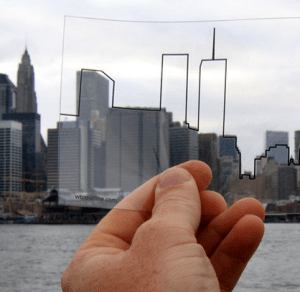
Image from World Affairs Council of Pittsburgh

I remember what I was doing on 9/11. I was at work at Red Dragon FM in Cardiff. When the news started breaking we were in a state of disbelief. We broke format and started having regular news updates. We took off all production and changed the playlist to remove inappropriate songs.

Someone recently asked me for examples of any on air production or imaging that we ran during that period, and to be honest, I have no recollection of us doing anything specific. I think we stripped everything back and felt our way through it. In the US, stations ran powerful montages. For us, it was their story – which involved us.

The same thing happened during the London bombings, whilst at Capital FM. We broke format, becoming a rolling news station – along with the other stations coming out of Leicester Square. I can’t recall us running anything in terms of production. Why would we – the emotional shock was so raw.

Today, I came across this very powerful visualisation from the New York Times – combing a large number of recordings from the day – from Flight Controllers, to the military, to someone who was on one of the planes. It plays alongside an animated timeline and transcript of the audio. I think this is a very powerful way of telling the story. No visuals are needed – it’s simply the power of words.

You might also be interested to see this video with Lee Harris of 1010WINS in New York City, who was on air at the time the planes hit the Twin Towers. Skip to 3:51 in to find it..

This is also worth a read – from the producer in charge if scheduling the music at BBC Radio 1 on the day of the attacks:
http://missingparsons.com/2011/09/soundtracking-911/